Creative Letter Patterns: Redefining Wall Decoration Through Typographic Art
In a world where visual communication is increasingly central to how we express identity, mood, and purpose, the walls around us have become canvases for something far more intentional than mere paint or wallpaper. Among the most compelling developments in this space is the rise of Creative Letter Patterns—a sophisticated, intricately designed typographic art form that transforms any surface into a statement of meaning, craft, and personality. Far from simple lettering, these patterns are labor-intensive, meticulously constructed designs that command attention and reward close study. For professionals, creators, and entrepreneurs who understand the power of environment on perception and performance, Creative Letter Patterns represent a convergence of design rigor, artistic tradition, and contemporary utility that is difficult to overlook.
What Creative Letter Patterns Really Are
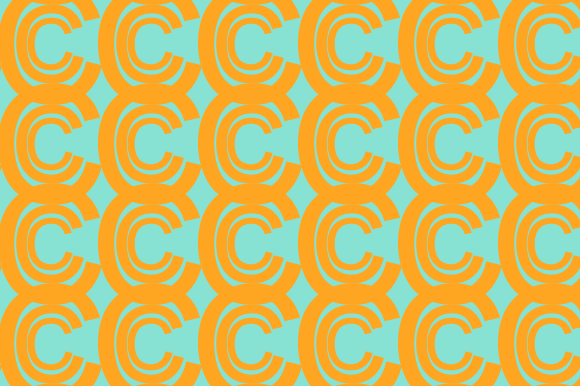
At its core, a Creative Letter Pattern is a typographic composition that goes beyond the standard arrangement of letters into words. Instead, it weaves letters, words, and phrases into a repeating or structured pattern that functions as both text and texture. The product described here is notably very difficult and long to produce—this refers to the painstaking design process required to achieve harmony between letterforms, spacing, curvature, and repetition. Each pattern is a bespoke creation, often generated from an EPS file that allows for infinite scalability without loss of fidelity, making it suitable for wall decoration in homes, offices, schools, and virtually any interior environment.
The difficulty lies in balancing readability with ornamental density. A Creative Letter Pattern must hold together as a wallpaper-like design when viewed from a distance, yet reveal its typographic content upon closer inspection. This dual nature is what sets it apart from generic wall decals or mass-produced typographic posters. It is not a quick assembly of fonts but a deliberate, often hand-tuned composition where every letterform interacts with its neighbors in a choreographed visual rhythm.
The Broader Context: Why Typographic Wall Art Matters Now
To understand the relevance of Creative Letter Patterns, it helps to look at where interior design, branding, and personal expression intersect today. The past decade has witnessed a shift away from sterile minimalism toward what designers call "meaningful maximalism"—spaces that are layered with narrative, texture, and personal significance. People no longer want walls that simply look clean; they want walls that speak. This is especially true in professional environments such as offices, co-working hubs, and creative studios, where the physical space directly influences brand identity, client perception, and employee mindset.
Simultaneously, the personalization economy has expanded. Consumers and businesses alike demand products that reflect their unique identity rather than off-the-shelf solutions. Creative Letter Patterns answer this need by offering a medium that can incorporate custom phrases, mission statements, core values, or even poetic fragments into the very fabric of the room. When a school installs a Creative Letter Pattern featuring its motto woven into an abstract geometric flow, the message is not just seen—it is experienced as part of the environment.
Another key trend is the blurring of digital and physical design workflows. The product's EPS file format is a direct nod to this reality. EPS (Encapsulated PostScript) is a vector format that enables designers to edit, resize, and reproduce the pattern at any scale without quality degradation. This means a Creative Letter Pattern can be printed on wallpaper, vinyl, fabric, or even applied as a mural. It bridges the gap between digital creation and physical installation, giving interior designers, architects, and DIY enthusiasts a versatile tool that adapts to their technical needs.
Why Professionals and Creators Are Paying Attention
The audience for Creative Letter Patterns is broadening beyond traditional interior decorators. Freelancers and entrepreneurs who operate home offices or boutique commercial spaces see these patterns as a way to differentiate their brand environment without resorting to corporate clichés. A creative agency might use a pattern that spells out its core philosophy in a looped, almost hidden arrangement—inviting clients to engage with the space on a deeper level. Marketers recognize that a distinctive wall design can become a backdrop for social media content, product launches, or client meetings, effectively becoming part of the brand's visual identity.
For professionals in design and architecture, Creative Letter Patterns offer a rare combination of aesthetic depth and functional clarity. Unlike abstract patterns that rely solely on shape and color, typographic patterns carry inherent meaning. This semantic layer allows designers to embed a room with subtext—a hospital corridor might feature calming words arranged in flowing curves, while a tech startup's lobby could pulse with action-oriented verbs in sharp, geometric formations. The pattern becomes a silent narrator of the space's purpose.
Schools and educational institutions are another significant adopter. Here, Creative Letter Patterns can reinforce literacy, values, or curriculum themes in a way that is both decorative and educational. A library might feature a pattern of literary quotes woven into a continuous design, while a science lab could display the periodic table in a visually engaging typographic layout. The difficulty of creating these patterns ensures that they are not generic—each is tailored to the institution's specific needs and character.
The Changing Workflows and Expectations Behind the Trend
The growing interest in Creative Letter Patterns is also driven by shifts in how people approach interior design. There is a movement away from static, one-time decoration toward adaptable, iterative environments. Because these patterns are delivered as EPS files, they can be modified, recolored, resized, or even partially redesigned to suit changing needs. A business rebranding can update its wall pattern without a full renovation—simply by printing a revised version of the file. This flexibility aligns with the modern preference for agile, cost-effective design solutions.
Furthermore, the expectation of experiential spaces has grown. Whether in hospitality, retail, or workplace design, the goal is no longer to fill space but to create an experience. A Creative Letter Pattern engages visitors in a way that flat paint or generic wallpaper cannot. It invites them to read, to discover, to interpret. This interactive quality—even if only visual—encourages longer dwell times, stronger emotional connection, and more memorable impressions. For a boutique hotel, a lobby wall featuring a pattern of local dialect or poetic lines can become a conversation piece and a social media magnet.
The production difficulty mentioned in the product description is not a drawback but a signal of artisanal value. In an era of mass production, there is a premium on things that require real skill and time to create. A Creative Letter Pattern that is "very difficult and long" to produce communicates authenticity, care, and exclusivity. It tells the buyer that they are acquiring something that cannot be quickly mimicked or replaced—a genuine piece of applied typographic art.
Practical Examples and Applications
Consider a marketing agency that wants its conference room to embody the brand promise of "Clarity Through Creativity." A Creative Letter Pattern could be designed where the phrase repeats in a subtle, interlocking geometry across a feature wall. The letters "C" and "T" might form structural nodes, while smaller words weave between them. The EPS file allows the agency to test different color variants—perhaps a muted gray for a calm atmosphere or a vibrant accent for energy—before committing to print.
In a home office, a freelancer might commission a pattern of motivational words or even a lyrical phrase from a favorite poem. Because the pattern is built as a vector file, it can be scaled to fit a single accent wall or an entire room. The difficulty of the pattern ensures that the letters are not merely repeated but are composed with careful attention to flow, balance, and negative space. The result is a wall that feels alive with language without being overwhelming.
For a school, the application can be both functional and inspiring. A primary school classroom could feature a Creative Letter Pattern of the alphabet in a playful, rhythmic arrangement that encourages literacy. Older students might benefit from a pattern that includes historical dates, scientific terms, or literary devices embedded in a larger design. The EPS format means the school's maintenance team can reprint sections as needed, or even update the pattern annually to align with new curricula.
In a corporate office, a Creative Letter Pattern can serve as a visual embodiment of company values. Words like "Innovate," "Collaborate," and "Adapt" can be arranged in a continuous loop that employees and visitors see daily. Beyond decoration, this reinforces culture and mission in a subtle, ambient way. Because the design is difficult to produce, it also signals that the company invests in quality and craftsmanship—an impression that matters in client-facing spaces.
Connecting Creative Letter Patterns to Larger Developments
The rise of Creative Letter Patterns is part of a broader movement toward contextual design—the idea that every element in a space should have a reason for being there. This aligns with the growing emphasis on wellness, sustainability, and intentionality in interior environments. A wall pattern that carries meaning reduces the need for additional signage or decorative clutter, supporting a cleaner, more purposeful aesthetic. It also reduces waste: because the pattern is digital and scalable, there is no overproduction of physical goods. The buyer prints exactly what they need, when they need it.
Technologically, the EPS file format represents a bridge between traditional graphic design and modern fabrication methods. It is compatible with cutting, plotting, digital printing, and even laser engraving on materials like wood, acrylic, or metal. This opens up possibilities beyond wallpaper—Creative Letter Patterns could be applied to room dividers, furniture surfaces, or even exterior signage. The difficulty of the pattern design ensures that the result is unique and visually complex, standing out in a landscape of simple decals and stencils.
The community of typography enthusiasts and lettering artists has also played a role in popularizing this form. Social media platforms like Pinterest and Instagram have fueled appreciation for intricate typographic work, and the EPS format allows these creators to share and sell their patterns with buyers who can then adapt them for specific spaces. This creator-to-consumer pipeline is reshaping how decorative art is distributed and customized.
A Practical Investment in Design and Meaning
For anyone considering a wall decoration that goes beyond the ordinary, Creative Letter Patterns offer a rare blend of beauty, intelligence, and adaptability. They are not a quick fix but a considered investment in the atmosphere of a room. The difficulty of production is a testament to the care embedded in every curve and spacing. Acquiring an EPS file means owning a design asset that can be used across multiple projects, scaled for different spaces, and even modified over time as tastes or needs evolve.
Whether you are a professional looking to elevate a client's office, a creator seeking a distinctive backdrop for your work, an entrepreneur building a brand environment, or an enthusiast who wants your walls to tell a story, Creative Letter Patterns deliver on all fronts. They represent a mature, thoughtful approach to typographic interior design—one that respects both the craft of lettering and the realities of modern spatial needs.
Thank you to suprijal.angel for providing a product that embodies this intersection of difficulty, artistry, and utility. For those ready to explore what a truly meaningful wall pattern can do, the EPS file is the key to unlocking a new dimension of interior expression.